
In modern power systems, relays, contactors, circuit breakers and intermediate relays play a vital role. These control components play an indispensable role in ensuring the safe and effective operation of circuits. Although they show similarities in some functions, they have obvious characteristics and differences in design principles, application scenarios, and operation methods.
Common characteristics analysis
First of all, what these devices have in common is that they are all indispensable control components in the power system. Whether they are relays, contactors, circuit breakers, or intermediate relays, they can all play the role of monitoring and control in the circuit, achieving precise control of circuit on and off, current size and direction. Especially in terms of switch control and circuit protection, these components can automatically or manually control the opening and closing of the circuit, promptly respond to circuit faults such as overload or short circuit, and prevent equipment damage and ensure personal safety by cutting off the circuit.
Differences in functions and principles
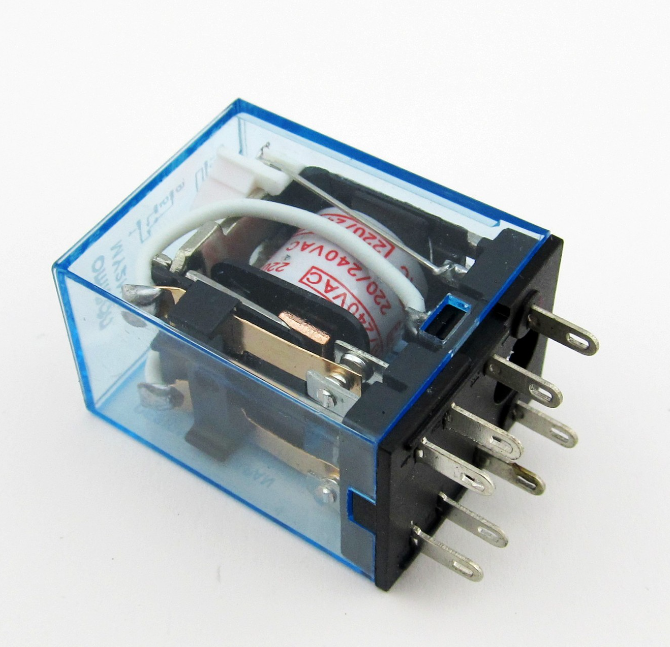
As an electronic control component, a relay controls a circuit through electromagnetic induction. It is mainly used for the control of small current circuits and can control larger current circuits through weak electrical signals. Contactors directly control mechanical contacts and are mainly used to control high-current circuits, such as starting and stopping motors and other high-power equipment. The design of the circuit breaker focuses on its overload and short-circuit protection functions. It can automatically or manually disconnect when the circuit is abnormal, thus protecting the safety of the circuit. The intermediate relay is an auxiliary control component, mainly used to expand the number of contacts and amplify control signals to meet the needs of complex circuits.